

Events
Online Program Supporters
APT's calendar of online programming is generously supported by:

This project has been funded in part by a grant from the National Trust Preservation Fund of the National Trust for Historic Preservation. Specifically, in support of growing participation of students and emerging professionals in online programs.
Roundtable: Decarbonizing the Built Environment Through Heritage
Tuesday, June 2, 2026
3:00 p.m. - 4:30 p.m. ET
Details
Join the APT Technical Committee for Sustainable Preservation (TCSP) for this roundtable discussion on Decarbonizing the Built Environment through Heritage. In this webinar, authors who contributed to the APT Bulletin Special Issue of the same title will provide a brief overview of their article topic followed by a moderated discussion led by the TCSP. Discussion topics include reuse of existing buildings as a critical decarbonization strategy, tools and methods for quantifying embodied carbon, aligning performance standards with historic buildings, and more.
Presented by the
Technical Committee on Sustainable Preservation
Learning Objectives
- Describe the essential role of building reuse and retrofit in decarbonization
- Identify the tools and metrics that can be used early in the design process for better outcomes for both preservation and building performance
- Discuss the ways that building performance standards can enhance the economic, environmental, and cultural relevance of historic buildings
- Explore various challenges and opportunities when balancing preservation standards and building performance targets
Continuing Education
1.5 LU/HSW/PDH CEU
Can't join the webinar live? A limited-access recording of this session will be available to those who register for the webinar.
Please note: Accreditation guidelines dictate that CEU credit is only available to participants of the live sessions. Each session earns 1.5 LU/HSW/PDH Continuing Education Units. APT is an accredited provider with the AIA, RCEP, and the ICC.
Registration Fees
- APT Members: $20
- Emerging Professional Members: $15 $0*
- Student Members: $10 $0*
- Non-Members: $35
* Thanks to the generous support of the Preservation Fund of the National Trust for Historic Preservation, APT is pleased to offer this program at no cost to Student members and Emerging Professional members. Not a member? Learn how to join here.
Speakers
- Sean Denniston, Principal, Heritage Green Consulting
- Lori Ferriss, AIA, PE, Executive Director, Built Buildings Lab
- Lyndley Kent, AIA, LFA, Principal, Neumann Monson Architects
- Tim Michiels, PE, PhD, Principal, Old Structures Engineering
- Eleanor Phetteplace, Project Manager, Old Structures Engineering
- Nakita Reed, AIA, NOMA, LEED AP, CPHC, Senior Director of Preservation, Operations for the African American Cultural Heritage Action Fund, National Trust for Historic Preservation
- Angela Wyrembelski, Associate Principal, Quinn Evans
Adapting Aspirational Modernism: The 1939 World’s Fair Belgian Friendship Building and Expo 67’s Habitat
Tuesday, June 9, 2026
2:00 p.m. - 3:30 p.m. ET
Details
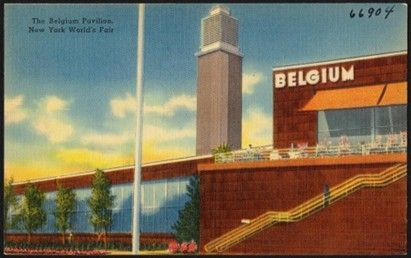
As showcases for invention and innovation, world fairs have presented unique creative opportunities for bold engineering and iconic architecture symbolizing progress. While many fair structures were never intended to survive beyond an exposition, vestiges remain and continue to evolve as enduring expressions of cultural pride and optimism. This webinar will explore the history, reuse and conservation of two geographically distant world’s fair icons conceived in very different times, places and socio-political environments, resulting in unexpectedly differing outcomes.
Belgian Friendship Building
The Belgian Building at Virginia Union University, the sole surviving structure from the 1939 New York World's Fair, presents two distinct preservation conditions rooted in its original design as a temporary exhibition pavilion. Its structural steel frame — built-up riveted columns and girders connected between assemblies with bolts, allowing rapid disassembly — has performed with exceptional durability, showing no measurable movement or significant corrosion after more than eighty years. The envelope system is another matter. Architectural terra cotta tiles, stamped "Pottelberg, Made in Belgium," are suspended from horizontal steel purlins by galvanized wire and held in place with mortar whose thermal expansion coefficient is incompatible with both the steel and the tile. Differential movement has cracked and displaced mortar throughout, leaving the purlin system exposed to water infiltration. The wall assembly offers no practical path to remediation: the uninsulated air gap resists insulation, the thin steel window frames cannot accept double-pane glazing, and interior furring would damage original soapstone sills throughout. Available interventions threaten harm to what remains, fail to address the underlying condition, or conceal character-defining features of the building — a consequence of a system designed for a two-season exhibition, now asked to perform indefinitely in the humid mid-Atlantic climate of Richmond, Virginia.
Bryan Clark Green, coauthor of The Robert L. Vann Tower and the Belgian Friendship Building, published in 2025, will chronicle this strange saga, the building’s international journey, its preservation, adaptation and many lives.
Habitat 67
When it was designed and built half a century ago by the young and promising architect Moshe Safdie, Habitat 67 reflected the most unconventional aspects of the Montreal landscape. Its prefabricated, modular concrete construction, stacked in an unusual and irregular configuration, was shocking. Safdie's concept behind Habitat 67's bold form aimed to introduce a cutting-edge housing option—a hybrid between the multilevel single-family home and the multi-apartment urban building. Over the years, it has attracted tourists and architecture enthusiasts from around the world to study its fascinating composition.
Habitat was designated a heritage building (historic monument) by the Quebec Ministry of Culture in 2009 to preserve its iconic facade and fundamental character. When Moshe Safdie decided to renovate and restore his own unit within the Habitat complex, his vision was to preserve its character-defining attributes while making significant improvements. Architect Ghislain Bélanger of CO12 Architects worked closely with Safdie to address decades of water damage and restore the interior while undertaking technical upgrades to meet 21st century sustainability and energy conservation standards. Safdie and CO12 architects continue to be involved in the ongoing restoration of the building’s concrete exterior.
Learning Objectives
- Understand the history and historic significance of the Belgian Friendship Building structure from the 1939 New York World's Fair and the Habitat 76 from Canada Expo 67 centennial celebration.
- Identify character-defining attributes of early to mid-century modernist buildings
- Distinguish the building's primary construction technologies and evaluate why each has performed differently over time.
- Evaluate the limitations of standard preservation repair strategies, including unit replacement, cavity insulation, and interior remediation, when applied to an integrated enclosure system never designed for long-term maintenance.
- Apply a framework for distinguishing buildings that resist preservation intervention because of formal design discipline from those that resist it because of designed impermanence, and consider the implications of that distinction for preservation practice more broadly.
Continuing Education
1.5 LU/HSW/PDH (pending)
Please note: Accreditation guidelines dictate that CEU credit is only available to participants of the live program.
Can't join the webinar live? A limited-access recording of this session will be available to those who register for the webinar.
Registration Fees
- APT Members: $20
- Emerging Professional Members: $15 $0*
- Student Members: $10 $0*
- Non-Members: $35
* Thanks to the generous support of the Preservation Fund of the National Trust for Historic Preservation, APT is pleased to offer this program at no cost to Student members and Emerging Professional members. Not a member? Learn how to join here.
Speakers
- Ghislain Bélanger, MOAQ, MRAIC, PA LEED
- Bryan Clark Green, PhD.
Can 3D Scanning and Printing Technology Help Repair Historic Steel Infrastructure?
Tuesday, November 10, 2026
12:00 p.m. - 2:00 p.m. ET
Details
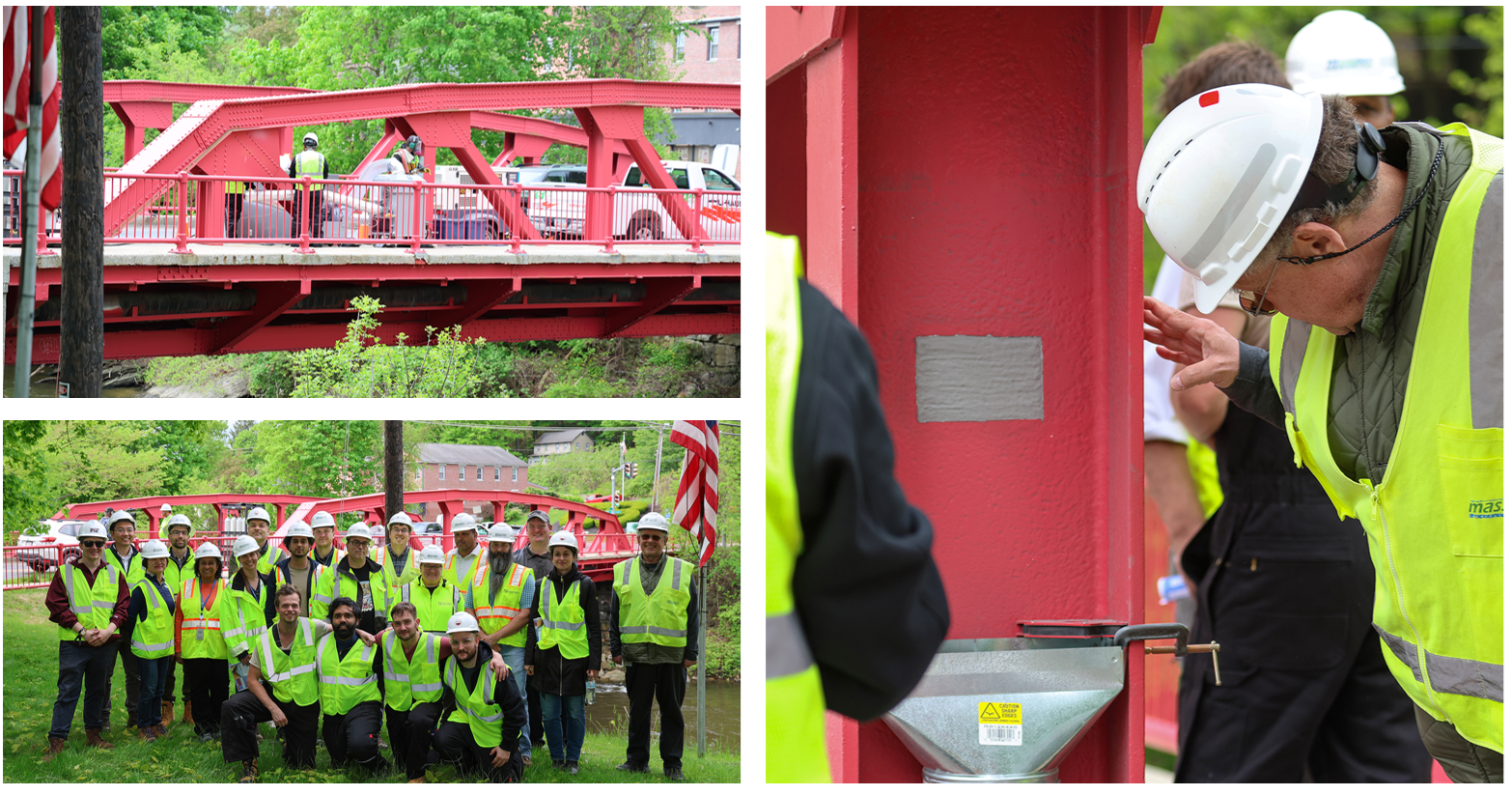
With the wide range of aging bridge types and conditions throughout the world, the need for quick, affordable and effective bridge repair techniques led one U.S. State Department (MassDOT) to partner with local universities (UMass Amherst and MIT) to research and develop 3D scanning and printing applications to help evaluate and restore deteriorated steel beam bridges throughout Massachusetts. This multi-year and phased collaborative research project yielded methods and lessons-learned for:
- documenting (3D scanning) and evaluating existing steel bridge beam deterioration,
- laboratory testing and evaluation of 3D printed steel bridge beam repairs, and
- adapting a potential new in-situ repair technology (cold-spray additive) into a commercially available, economical and in-situ repair application.
This webinar invites discussion and questions from the preservation community as it continues to explore the limits of 3D scanning and cold-spray additive technology in preserving our Nation’s aging (bridge and building) infrastructure.
Learning Objectives
- Explain the significance of steel bridge deterioration within Massachusetts' infrastructure network and the importance of innovative repair technologies in extending service life.
- Describe the potential uses for 3D scanning technologies in documenting and assessing deterioration in existing steel bridge beams.
- Discuss some of the capabilities and limitations of cold-spray additive applications for preservation and repair projects.
- Compare traditional bridge inspection methods with emerging 3D scanning techniques for evaluating steel deterioration.
Continuing Education
2 LU/HSW/PDH CEU
Can't join the webinar live? A limited-access recording of this session will be available to those who register for the webinar.
Please note: Accreditation guidelines dictate that CEU credit is only available to participants of the live sessions.
Registration Fees
- APT Members: $30
- Emerging Professional Members: $25 $0*
- Student Members: $20 $0*
- Non-Members: $45
* Thanks to the generous support of the Preservation Fund of the National Trust for Historic Preservation, APT is pleased to offer this program at no cost to Student members and Emerging Professional members. Not a member? Learn how to join here.
Speakers
New and Old: The 2027 Model Codes and Best Practices
Thursday, December 3, 2026
1:00 p.m. - 4:30 p.m. ET

Details
New and Old: The 2027 Model Codes and Best Practices Applying Codes to Existing and Historic Buildings - A Two Session Series!
Session 1: The 2027 Model Codes
Among the 2027 model codes, published by the International Code Council in late 2026, are the
International Existing Building Code and the
International Energy Conservation Code. Both regulate the rehabilitation of existing and historic buildings, with special provisions available to qualified historic structures. Given the significant changes to the IEBC included in the 2027 edition, the ability to navigate these documents for the benefit of the historic or existing building is essential. This session will include an overall presentation on the codes affecting historic or existing buildings and present opportunities to balance code requirements with the parallel goals of maintaining historic significance, cost, and construction efficiency. Given the direct relationship between energy requirements and building HVAC systems, the session will include a presentation on the unique considerations affecting the selection of equipment for historic buildings.
Learning Objectives
- Discuss the new format, content, and changes in the 2027 International Existing Building Code.
- Identify the issues and potential solutions facing historic buildings vulnerable to exterior fires.
- Describe requirements and opportunities for historic buildings in the International Energy Conservation Code and other reference standards.
- Review considerations for meeting HVAC performance requirements that can also protect and enhance the historic building.
Continuing Education
3.5 LU/HSW/PDH CEU
Can't join the webinar live? A limited-access recording of this session will be available to those who register for the webinar.
Please note: Accreditation guidelines dictate that CEU credit is only available to participants of the live sessions.
Registration Fees
- APT Members: $75
- Emerging Professional Members: $50 $0*
- Student Members: $30 $0*
- Non-Members: $125
* Thanks to the generous support of the Preservation Fund of the National Trust for Historic Preservation, APT is pleased to offer this program at no cost to Student members and Emerging Professional members. Not a member? Learn how to join here.
Speakers
Texas City Gathering
Tuesday, December 8, 2026
6:00 p.m. - 8:00 p.m. CT

Details
After successful events in Chicago, Washington, DC, and New York City APT heads to San Antonio!
Please join us for an evening event to connect with colleagues, meet new preservation peers, hear the latest news from APT international and our Texas Chapter, and learn from the Alamo team about the exciting ongoing work at this UNESCO World Heritage and National Historic Landmark site.
After some general comments about APT and the tremendous work at the Alamo there will be opportunities to tour the site to see and meet with the experts doing active restoration work.
Wine, beer, and light refreshments will be served.
This is an educational and social event with a brief formal program plus opportunities to tour and socialize.
Registration Fees
- APT Members and APT Chapter Members: $25
- Non-Member Students and Emerging Professionals: $25
- Non-Member Professionals: $35
New and Old: The Performance Compliance Method
Thursday, December 10, 2026
1:00 p.m. - 4:30 p.m. ET
Details
New and Old: The 2027 Model Codes and Best Practices Applying Codes to Existing and Historic Buildings - A Two Session Series!
Session 2: The Performance Compliance Method - A Little Used but Powerful Tool
The Performance Compliance method, one of three compliance paths included in the International Existing Building Code (IEBC), is considered by some to be the optimal code path for existing and historic buildings. In 1985 this compliance path, then titled “Compliance Alternatives,” was introduced to the BOCA National Building Code, one of the legacy construction codes on which the IEBC is based. Its unique structure uses a numerical risk index system to establish code-minimum solutions unique to a building’s construction and occupancies classifications. This session will provide an overview of this compliance method. Although it will not serve as a detailed training session for this method, it will demonstrate the benefits of the method with the intention of encouraging its use by architects and engineers. The session will include case studies where the requirements of multiple compliance paths have been explored and compared, ultimately leading to selection of this compliance method due to the cost and construction efficiencies it provides when applied to historic or other existing buildings.
Learning Objectives
- Explore the value the Performance Compliance Method can provide when rehabilitating historic buildings.
- Discuss the basic mechanics of using the Performance Compliance Method.
- Describe the value of comparing compliance paths permitted by the International Existing Building Code.
- Review the different outcomes permitted by use of the Performance Compliance Method, and how these can positively affect budget while protecting historic materials and spaces. .
Continuing Education
3.5 LU/HSW/PDH CEU
Can't join the webinar live? A limited-access recording of this session will be available to those who register for the webinar.
Please note: Accreditation guidelines dictate that CEU credit is only available to participants of the live sessions.
Registration Fees
- APT Members: $75
- Emerging Professional Members: $50 $0*
- Student Members: $30 $0*
- Non-Members: $125
* Thanks to the generous support of the Preservation Fund of the National Trust for Historic Preservation, APT is pleased to offer this program at no cost to Student members and Emerging Professional members. Not a member? Learn how to join here.
Speakers
Simos Gerasimidis, Ph.D
Associate Professor, Department of Civil and Environmental Engineering, University of Massachusetts Amherst
Visiting Associate Professor, Massachusetts Institute of Technology (MIT)
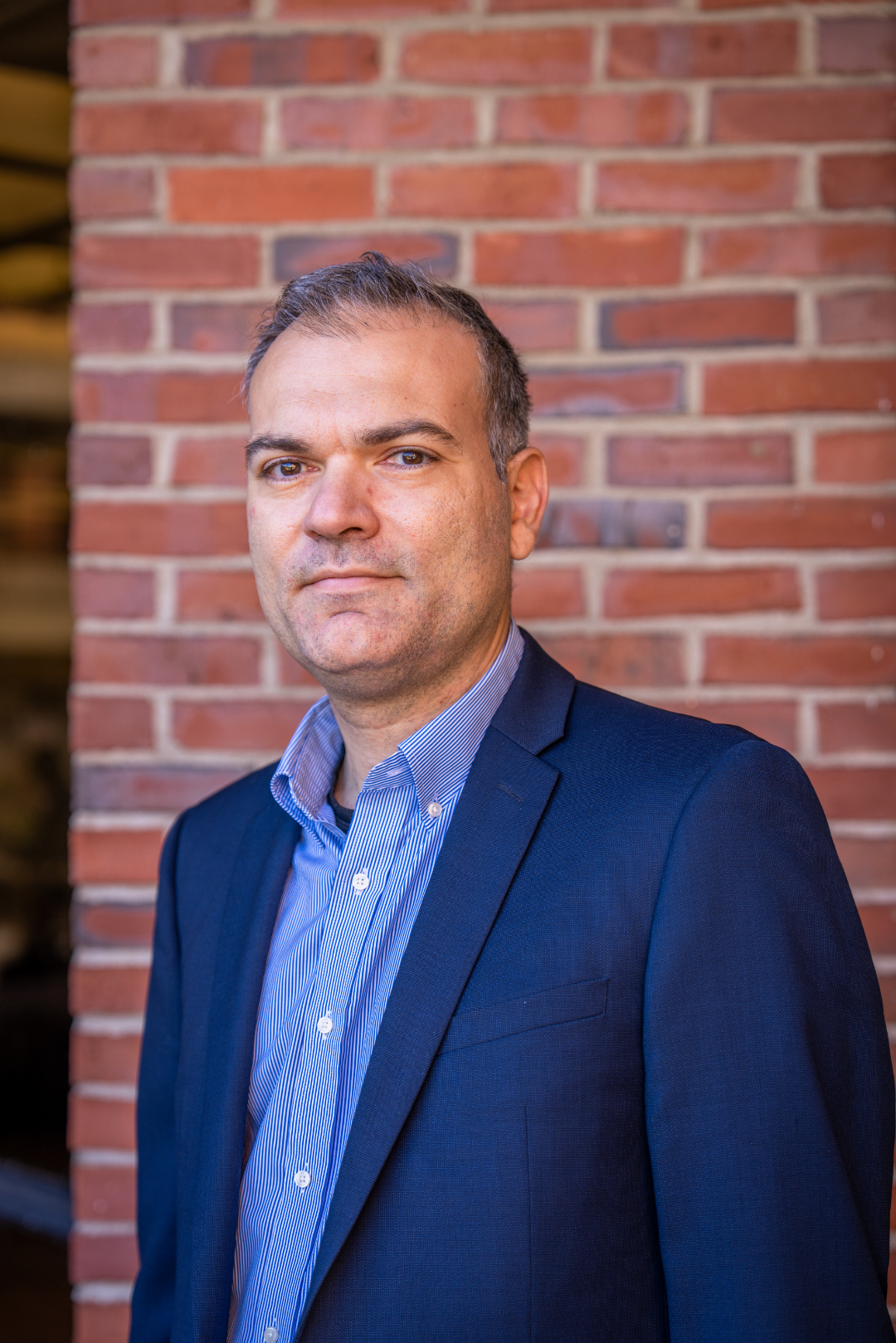
Simos Gerasimidis, Ph.D., is an Associate Professor in the Department of Civil and Environmental Engineering at the University of Massachusetts Amherst and a Visiting Associate Professor at the Massachusetts Institute of Technology (MIT). His research focuses on the assessment, preservation, and rehabilitation of aging infrastructure, with particular emphasis on steel bridges, structural stability, additive manufacturing, and advanced sensing technologies.
Dr. Gerasimidis leads several federally and state-funded research programs aimed at extending the service life of transportation infrastructure. His work has pioneered the use of cold-spray additive manufacturing for the repair of steel bridges, culminating in the first field deployment of this technology on an in-service highway bridge in the United States. He also develops innovative methods for evaluating the remaining capacity of deteriorated bridges using full-scale experimental testing, structural modeling, and high-resolution 3D scanning.
His research has been supported by the National Science Foundation (NSF), the Federal Highway Administration (FHWA), the Massachusetts Department of Transportation (MassDOT), and other state and federal agencies. Dr. Gerasimidis is the recipient of the NSF CAREER Award and has received multiple national awards for his contributions to bridge engineering and infrastructure innovation. His work bridges cutting-edge research with practical implementation, helping transportation agencies make safer, more cost-effective decisions for maintaining critical infrastructure.
Alyson Bedard
State Bridge Preservation Engineer, MassDOT

Alyson Bedard is the State Bridge Preservation Engineer at MassDOT. She earned her Bachelor of Science and Master of Science in Civil Engineering at Worcester Polytechnic Institute and is a licensed professional structural engineer. Her distinct passions for repairing bridges led her to her current role where she has worked to build a program for MassDOT that focuses on maintenance and preservation of bridges across the Commonwealth. As part of her role, she collaborates across the state with District Bridge Sections to provide technical insight as well as aid in developing programs to meet the goals of each District. She oversees the preservation unit at MassDOT which designs site-specific bridge projects, performs reviews of projects, and manages projects.
Sean Denniston
Principal, Heritage Green Consulting

Sean is the principal of Heritage Green Consulting, a preservation consultancy working at the intersection of historic preservation and sustainability. He brings particular attention to how sustainability policies impact the preservation of historic buildings and how to craft these policies to limit harm and even benefit historic buildings. His work at Heritage Green is built on a career at the forefront of sustainability and decarbonization codes and policy. He was formerly an Associate Director at New Buildings Institute where he was the subject matter expert on existing buildings for NBI’s work in energy codes, decarbonization policy and building performance standards.
He earned a Bachelor’s Degree in Architecture with a minor in Architectural History at the University of Oregon and a Master’s Degree in Historic Preservation at the University of Pennsylvania.
Lesley M. Gilmore, AIA, FAPT, APT RP
Preservation Architect, Gilmore Franzen Consulting, LLC

Lesley Gilmore is a registered preservation architect in the Rocky Mountain West. She takes a systematic approach to intervening in the performance of historic buildings while enhancing their level of safety. This begins with documenting the subject building and the materials, interpreting the code in a way that makes the best use of the building and protects the users, and being on good terms with local and state code officials. She is a member of the APT Technical Committee on Codes and Standards and a contributing author to the upcoming NCPTT publication to be presented at the webinar.
Mike Jackson, FAIA
Architect

Mike Jackson, FAIA is an architect in Springfield IL. He was the Deputy State Historic Preservation Officer (SHPO) in Illinois from 2010-2014 as part of a thirty-one career in public service. He is a member of the Association for Preservation Technology (APT) and is co-chair of the Technical Committee on Codes and Standards and director of the APT Building Technology Heritage Library. He was a visiting professor of architecture at the University of Illinois at Urbana-Champaign. He is a principle in
Upstairs Downtown, a nationally recognized training program encouraging redevelopment of older properties on America’s Main Streets. He is the board president of the National Building Arts Center, a new museum with an impressive collection of architectural artifacts.
Mike Jackson, FAIA
Architect

Marilyn Kaplan, Architect and member of the APT College of Fellows, is principal of Preservation Architecture, a firm specializing on historic buildings in New York State. She has spoken and published widely on the topic of codes and historic buildings, and is the author of the recent
Preservation Brief 51: Building Codes for Historic and Existing Buildings, published by the National Park Service. She has served on the International Code Council’s committees for the 2024 and 2027
International Existing Building Code
and previously on the Cultural Resources committee of the NFPA. She is a founding chair of the APT Technical Committee on Codes and Standards, and is the lead author on the NCPTT publication to be presented at the webinar.
Laine Mclaughlin, AIA
Senior Project Manager, Anderson Hallas Architects

Laine McLaughlin, AIA, is a Senior Project Manager at Anderson Hallas Architects, a firm specializing in historic preservation and public architecture. Laine has worked on diverse historic resources, from National Historic Landmarks to the humble and remote. Her recent work emphasizes improving resilience against wildfire, flooding and heavy snow while keeping historic character intact. Through onsite assessment and rehabilitation of fire-damaged buildings, she has gained firsthand insight into wildfire behavior and its effects on historic materials.
A graduate of the United States Air Force Academy, Laine earned her Master of Architecture at the University of Colorado at Denver, followed by post graduate study in Conservation of Monuments and Sites at the University of Leuven in Belgium.
Thomas Newbold, PE
President, Landmark Facilities Group, Inc.
Tom is a founding member of the LFG from its inception in 1988. He holds an MBA from the University of Connecticut and a Bachelor of Science from Washington University. He is a licensed professional engineer in 23 states. Tom has over 35 years of engineering experience and shares this knowledge throughout the firm. He is especially adept at all aspects of HVAC controls including hardware, software and coding. Tom is an active member of the Association of Preservation Technologists and participates in many of their sanctioned events. As a Certified Geothermal system Designer, he has taught several classes on the subject and utilizes this technology in his own home. Tom is a resident of Trumbull, CT where he resides with his wife and two dogs.
Tina Roach, AIA
Historical Architect, National Park Service, Technical Preservation Services

Tina Roach, AIA, is a historical architect with the National Park Service, Technical Preservation Services, based in Washington, DC, where she supports private investors participating in the Federal Historic Preservation Tax Incentives program by reviewing rehabilitation projects in vacant or under-utilized historic buildings. She is the lead researcher and author of Preservation Brief 52: Wildfire Adaptation and Historic Buildings. Her interest in revitalizing historic buildings began in earnest when pursuing her Master of Architecture at the University of Texas at Austin and continued during her 20 years practicing architecture in the private sector. Honored as the 2009 laureate of the Richard Morris Hunt Prize, Tina continues to engage in this Franco-American exchange among preservation professionals in the US and France.